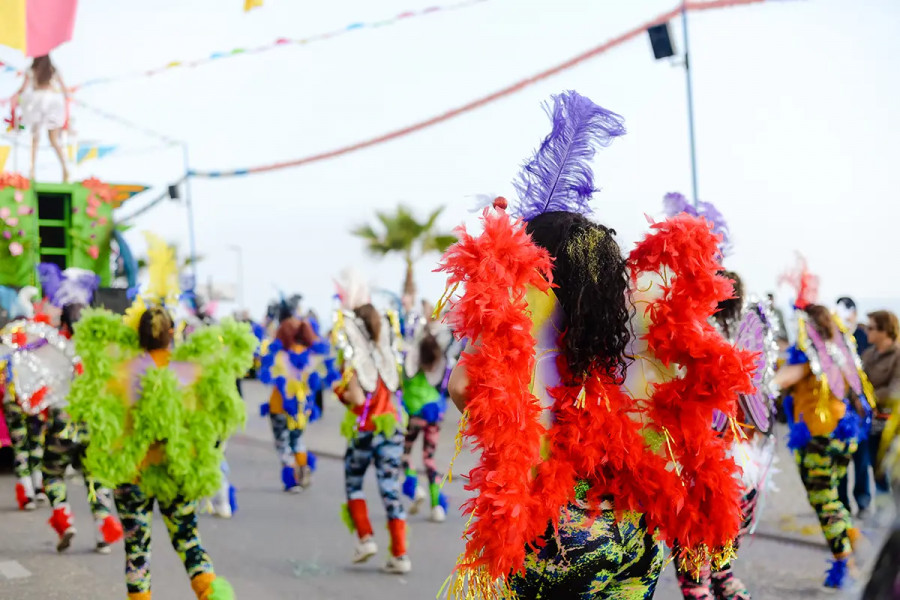
No carnaval, ninguém leva a mal!
Carnival in Portugal is one of the country’s most exuberant celebrations.
Also Known as Entrudo, it marks a moment of collective release, when music fills the streets, costumes dissolve social boundaries, and daily life gives way to satire, spectacle, and excess.
Rooted in ancient pagan rituals celebrating the end of winter, Carnival later merged with the Christian calendar, aligning with Shrove Tuesday, the final day before Lent.
Portuguese Carnival reflects strong Brazilian influence, blending European, Christian, and West African traditions through music, dance, colourful costumes, and parades, while retaining its own identity.
Smaller in scale than Venice or Rio but equally energetic, Carnival in Portugal brings together folklore, religious symbolism, political satire, and modern party culture.
When Is Carnival in Portugal?
A common question for visitors is when Carnival takes place in Portugal. In 2026, it's:
- Carnival Tuesday (Shrove Tuesday): 17 February 2026
This is the national high point of Carnival celebrations. If you can only attend one day, this is the most intense and festive moment.
However, Carnival in Portugal runs for several days, not just one.
The main celebration period stretches from Friday 13 February to Tuesday 17 February 2026, with parades, street parties, and cultural events taking place throughout Lisbon and the country.
Some regions extend Carnival well beyond these dates. Destinations such as Madeira, Ovar, and Loures offer programmes that begin weeks earlier or continue past Carnival Tuesday.
The weekends leading up to Carnival often feature the biggest parades, making them a good alternative for travellers with limited time.
Read More:
Portuguese Bank Holidays
Portugal’s Weather: A Year-Round Climate Guide
Carnival in Lisbon: What to Expect
Lisbon’s Carnival Style
Carnival in Lisbon is defined by its decentralised format. Unlike Rio’s single, iconic parade, Lisbon hosts Carnival events across multiple neighbourhoods.
In 2026, celebrations will take place in eight parishes, with 17 authorised Carnival groups leading parades and street parties across the city,
The festivities run largely from 13 to 17 February, bringing together street parties, parades, cultural events, and some of the country’s best seasonal food and drink.
Rather than one focal point, Lisbon’s Carnival unfolds through neighbourhood parades, roaming street bands, and spontaneous celebrations that spill out of bars and squares late into the night. This structure gives the city’s Carnival a relaxed, participatory feel.
Most street events are free to attend, making Carnival in Lisbon highly accessible. A small number of cultural programmes—such as concerts or family-oriented balls—are ticketed, but prices remain modest.
Key Carnival Areas in Lisbon
Carnival energy concentrates in several key areas:
- Baixa, Chiado, and Rossio, where parades pass through historic streets and crowds gather throughout the day;
- Cais do Sodré, known for late-night celebrations and nightlife spillover
- São Vicente, home to alternative and community-led parades
- Belém, where cultural venues host concerts and organised events.
Highlight Events in Lisbon (2026)
Among the standout events are major street parades such as:
- Colombina Clandestina, one of the city’s best-known Carnival groups.
For a calmer and more refined experience:
- The Lisbon Metropolitan Orchestra will perform a Carnival Concert at the Centro Cultural de Belém (CCB) (tickets from €21);
- As well as a family-friendly Carnival Ball at the Luís de Camões Theatre in Belém (tickets €3).
Timings vary: some events take place in the afternoon, while others begin late at night and continue into the early hours, particularly in nightlife districts.

Read More:
Best Time to Visit Portugal, According to Locals & Experts
Beyond the City: Best Carnivals Near Lisbon
Loures Carnival
Just north of Lisbon, Loures offers the closest thing to a classic, large-scale Carnival experience.
It's widely considered the “big parade” option for those based in the capital.
Loures features fixed parade routes, elaborate floats, and thousands of costumed participants.
In 2026, the Carnival follows the theme “A Journey Through Time”, with two main parades featuring over 15 floats and more than 2,500 participants each.
The programme runs from 7 to 18 February, with particularly intense celebrations from the 14th onward, including night events and closing ceremonies.
Torres Vedras Carnival
Often described as “the most Portuguese Carnival”, Torres Vedras offers a sharp contrast to both Lisbon and Loures. Its celebrations are rooted in satire, tradition, and local identity rather than spectacle alone.
Key features include politically charged floats, exaggerated caricature puppets, and the iconic matrafonas—men dressed as women.
Audience participation is central, with spectators encouraged to interact with parades and take part in playful traditions such as throwing cocotes, small paper or rubber projectiles.
Events run from 13 to 18 February, creating multiple peak moments across the Carnival period. Torres Vedras is particularly appealing to cultural travellers and repeat visitors seeking authenticity over scale.
Please note that the Torres Vedras Carnival has been cancelled in 2026 due to poor weather conditions.
Portugal’s Top Carnival Destinations
Beyond Lisbon and its surroundings, several destinations stand out nationally.
- Madeira (Funchal) hosts Portugal’s most internationally famous Carnival, with extended festivities, a glamorous Allegorical Parade, and the humorous Trapalhão Parade;
- In the south, Loulé offers a Brazilian-style Carnival with the added advantage of Algarve sunshine;
- Ovar, in central Portugal, boasts one of the country’s longest Carnival seasons, from the 24th of January to February 17th, deeply rooted in local participation and satire.
Northern and interior regions preserve older traditions, including the Caretos and Entrudo Chocalheiro, where folklore-driven rituals take precedence over parades, some with UNESCO recognition.
Practical Tips for Enjoying Carnival in Portugal
- Plan for crowds on Carnival Tuesday and weekends, dress in layers suitable for February weather, and embrace costumes where possible.
- Public transport is often the easiest way to move around during peak days, and accommodation should be booked well in advance.
- Most street events are free, but ticketed cultural events may sell out.
Choosing the Right Carnival Experience
- Lisbon suits first-time visitors and party-focused travellers, while destinations like Loures and Torres Vedras offer more structured or traditional experiences.
- Families may prefer daytime events and cultural programming, while folklore enthusiasts should look beyond the capital.
- Using Lisbon as a base allows travellers to sample multiple Carnival styles within a single trip.
Why Carnival in Portugal Is Worth Experiencing
- Carnival in Portugal balances tradition, satire, and spontaneity in a way few countries manage.
- Though often overshadowed by its Brazilian counterpart, it remains one of Europe’s most characterful and underrated festivals—and Lisbon sits at the heart of it all.
- Carnival may last only a few days, but the sense of belonging it creates is something many people discover they don’t want to leave behind.
Frequently Asked Questions
When is Carnival in Portugal in 2026?
- Carnival in Portugal takes place in February 2026, with Carnival Tuesday falling on 17 February 2026. The main celebrations typically run from 13 to 17 February, with some destinations hosting events before and after these dates.
Is Carnival a public holiday in Portugal?
- Yes. Carnival Tuesday is widely treated as a public holiday in Portugal, with schools, many offices, and some businesses closed or operating on reduced hours.
Is Lisbon Carnival free to attend?
- Yes. Most Carnival events in Lisbon are free, including street parades, neighbourhood parties, and live music events. Some cultural activities, such as concerts and family-oriented Carnival balls, require tickets, but prices are generally affordable.
Does Lisbon have a main Carnival parade?
- No. Lisbon does not have a single, central Carnival parade. Instead, Carnival is decentralised, with multiple blocos and parade groups performing across different neighbourhoods and parishes throughout the city.
What are the best places to celebrate Carnival near Lisbon?
Two of the most popular Carnival destinations near Lisbon are:
- Loures, known for its large-scale parades and elaborate floats;
- Torres Vedras, famous for satire, tradition, and audience participation.
Both are easily accessible as day trips from Lisbon.
What should I wear to Carnival in Portugal?
- Costumes are encouraged but not mandatory. Comfortable shoes, layers for February weather, and weather-resistant clothing are recommended. Many locals and visitors wear simple or playful costumes rather than full parade outfits.
Is Carnival in Portugal family-friendly?
- Yes, many Carnival events—particularly daytime parades and cultural programmes—are family-friendly. Lisbon, Loures, and Madeira all offer activities designed for children, though late-night street parties are more adult-oriented.
How does Carnival in Portugal compare to Rio or Venice?
- Carnival in Portugal is generally smaller in scale than Rio and less formal than Venice. It combines Brazilian musical influence with Portuguese satire, folklore, and Christian traditions, creating a more informal and participatory experience.